
Scientific rigour at the heart of every model we build.
Profenso works in sectors where decisions matter — healthcare, finance and engineering. That is why our research programme is grounded in peer-reviewed science, transparent methods and a deep partnership with Australia's leading universities.
Why our research matters
When AI is used in healthcare, a wrong prediction can change a person's life. We take that responsibility seriously. Every Profenso project is built with the same standards used in academic research: rigorous testing, methods that can be explained, honest measures of uncertainty, and neural network designs tailored to the problem at hand.
Where possible, our solutions run locally and keep data anonymised — so that safety, privacy and accuracy reinforce one another rather than compete.
A bridge between research and practice
Scientific research underpins progress in every applied field. We see our role as keeping the bridge between industry and academia open and well travelled. To that end, we maintain close working relationships with major Queensland institutions:
 The University of Queensland
 Queensland University of Technology
 QIMR Berghofer
 University of the Sunshine Coast
Through adjunct and honorary appointments at these institutions, we secure collaborative research grants, offer top-up scholarships and host internship placements for current and prospective students. Our academic standing also allows us to provide industry-based co-supervision of PhD theses.
Where we are currently working
Our research interests sit at two ends of the spectrum: the mathematical and architectural foundations of AI models, and the safe, clinical application of AI in ophthalmology, cancer and mental health.
-
01
AI safety in sensitive sectors
Building methods and standards that make AI safe to use in high-stakes settings such as healthcare.
-
02
AI vision for glaucoma
Using computer vision to improve clinical and biological understanding of glaucoma — one of the leading causes of irreversible blindness.
-
03
Explainable AI for vision and language
Developing the mathematical and analytical algorithms that allow modern AI models to be interpreted and trusted by domain experts.
-
04
Local AI agents for skin cancer
Applying privacy-preserving, on-device AI agents to improve clinical phenotyping of keratinocyte cancers.
-
05
Multi-agent frameworks for professional work
Designing systems in which multiple AI agents cooperate to carry out complex, software-based professional tasks under human oversight.
-
06
AI for scalable quality assurance in biomanufacturing
Designing multi-modal, high-spectrometry AI-vision solutions for highly-accurate and reliable quality control methods in high-tech biomanufacturing sector.
Our scientific collaborators
We work alongside leading Australian researchers whose expertise spans mathematics, genetics, ophthalmology and biotechnology.
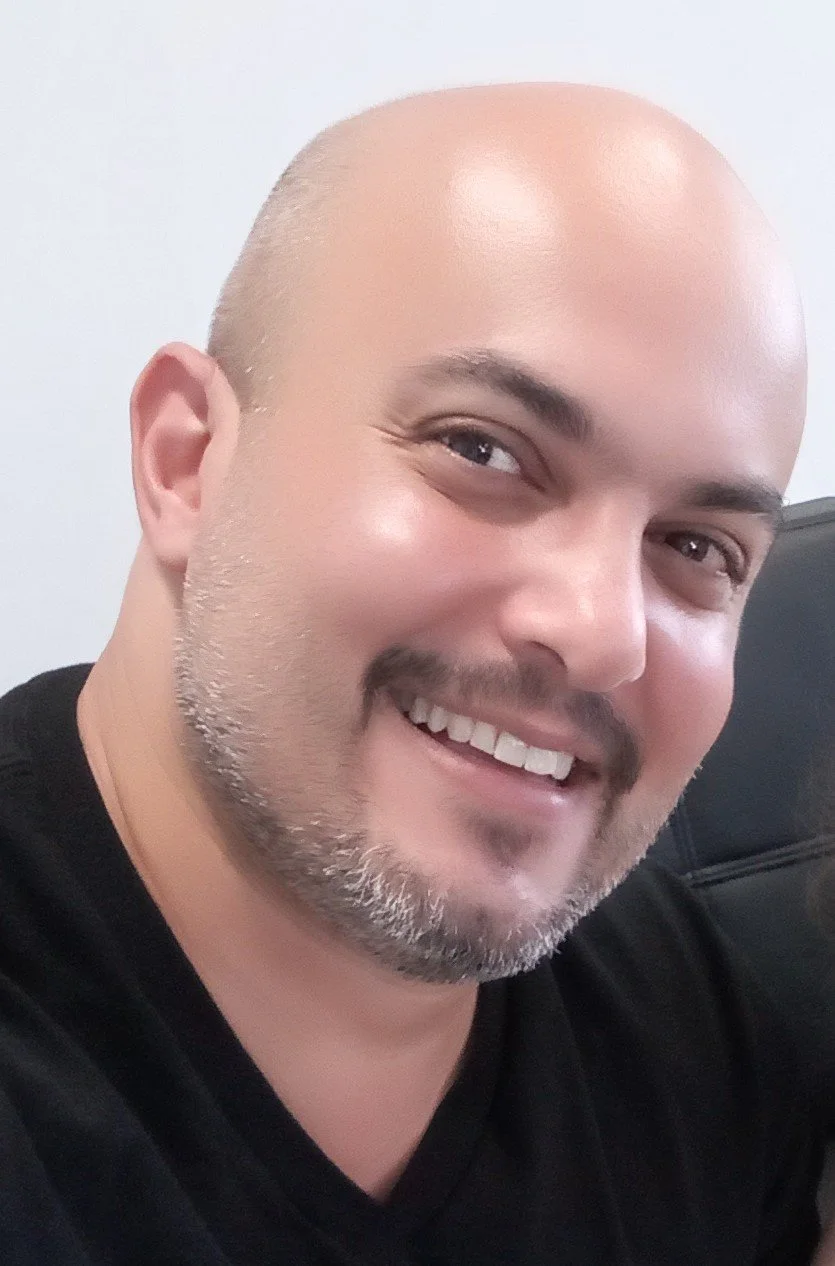
Professor Fred Roosta
School of Mathematics and Physics, The University of QueenslandFred is a Professor at The University of Queensland, an Associate Investigator with the ARC Centre of Excellence for Mathematical and Statistical Frontiers (ACEMS), and a Distinguished Research Scholar at the International Computer Science Institute (ICSI) in Berkeley, USA.
- Machine Learning
- Numerical Optimisation
- Randomised Algorithms
- Computational Statistics
- Scientific Computing
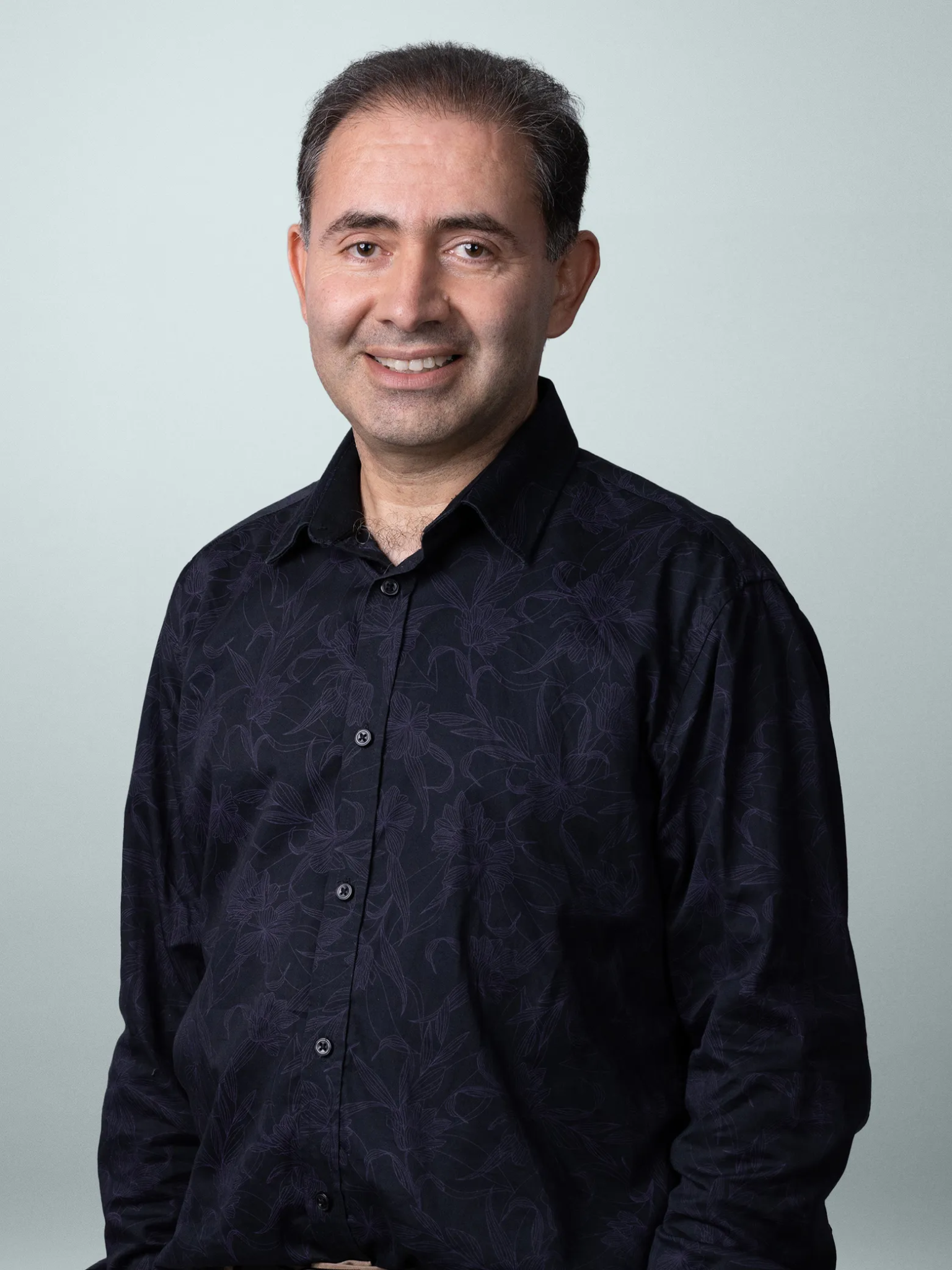
Associate Professor Puya Gharahkhani
Genomics, Imaging and AI Laboratory, QIMR BerghoferPuya leads the Genomics, Imaging and AI Laboratory at QIMR Berghofer and holds a prestigious NHMRC Investigator Grant along with two MRFF grants. His research uses statistical genetics and machine learning to identify disease genes for complex traits — with a particular focus on neurodegenerative diseases of the eye and brain, including glaucoma, macular degeneration, dementia and Parkinson's disease.
- Statistical Genetics
- Multimodal AI
- Ophthalmology
- Neurodegeneration
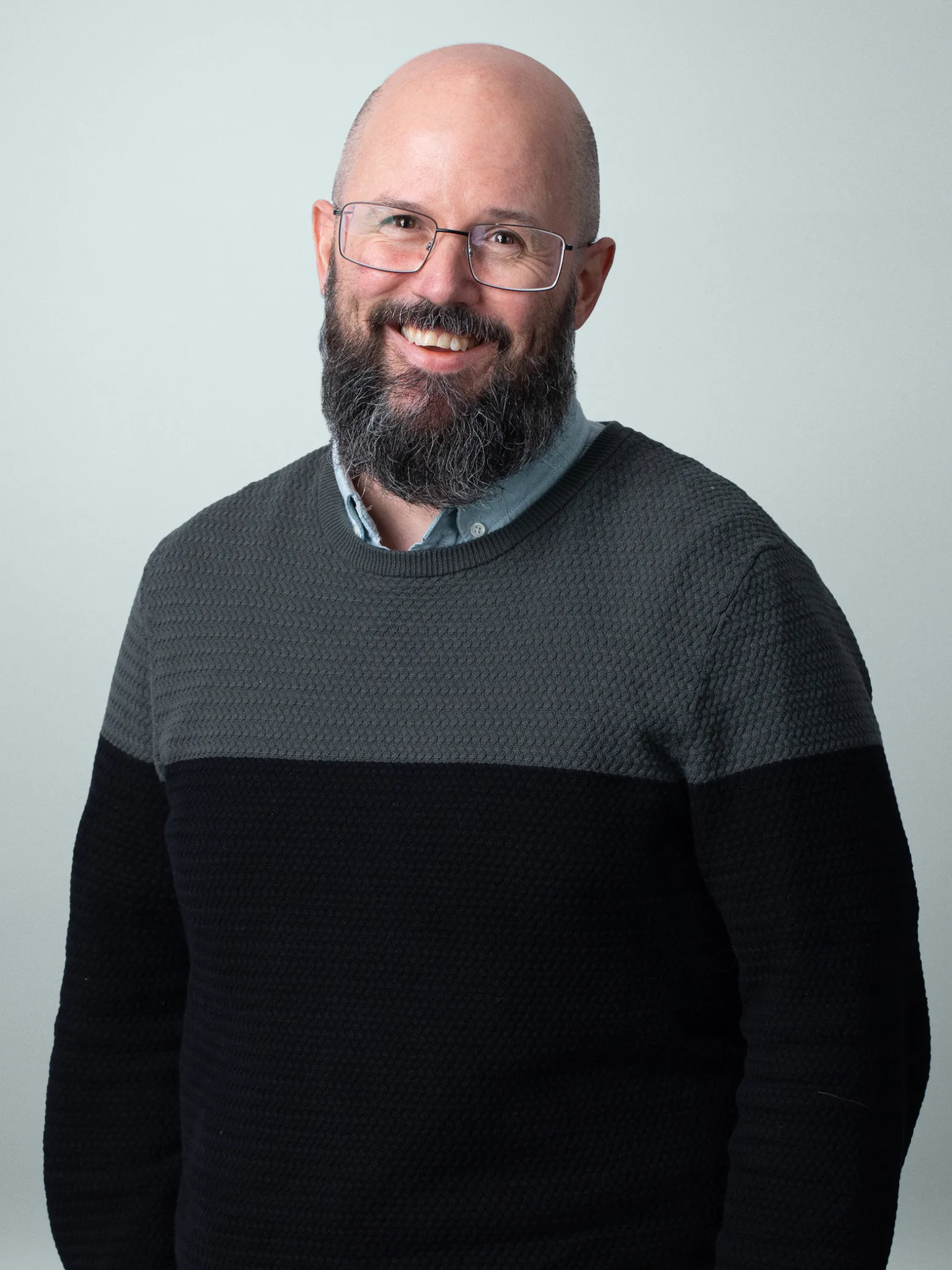
Associate Professor Matthew H. Law
Genetics and Skin Cancer Lab, QIMR BerghoferMatthew heads the newly formed Genetics and Skin Cancer Lab at QIMR Berghofer. He is recognised for his work in large-scale data analysis and the application of statistical techniques to uncover the genetic underpinnings of skin cancer, particularly melanoma.
- Statistical Genetics
- Genome-wide Association Studies
- Polygenic Risk Scores
- Skin Cancer
Professor Abigail Elizur
Centre for Bioinnovation, University of the Sunshine CoastAbigail is Co-Director of the Centre for Bioinnovation. She joined the University of the Sunshine Coast in 2004, after a senior research role with the Queensland Department of Primary Industries at the Bribie Island Research Centre. Her major research focus is the application of biotechnology to aquaculture.
- Biotechnology
- Aquaculture
- Applied Genomics
Our current PhD students
We co-supervise doctoral candidates whose work pushes the boundaries of interpretable AI, genetic risk prediction and large-language-model phenotyping.
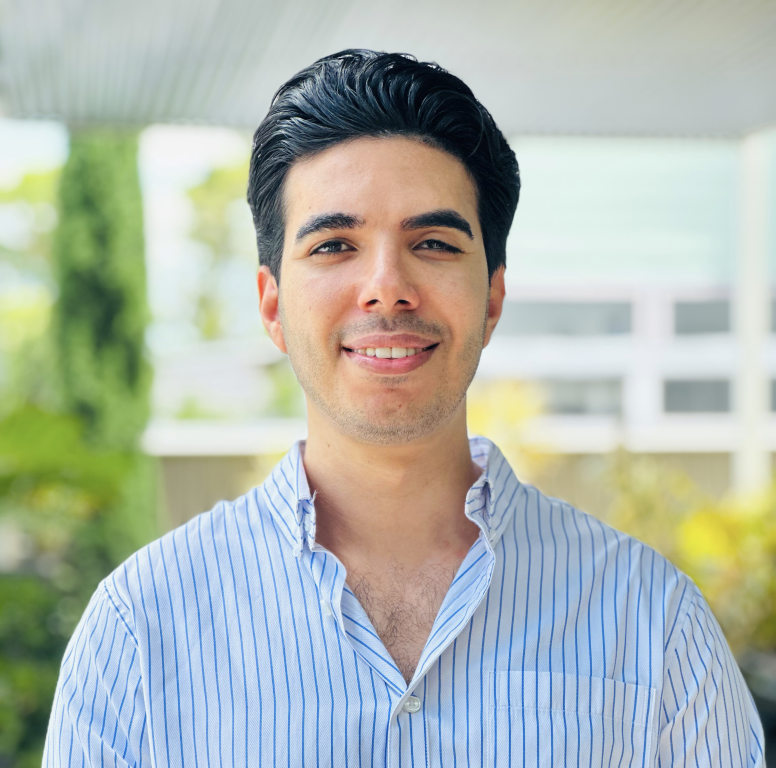
Eslam Zaher
Interpretable AI — Theory and PracticeIn collaboration with industry partner Max Kelsen, Eslam's PhD is supervised by Dr Fred Roosta-Khorasani, Dr Quan Nguyen and Dr Maciej Trzaskowski. His work explores the behaviour of black-box models and develops interpretable methods to support the safe adoption of AI in healthcare.

Asma Aman
AI for genetic risk in glaucomaAsma's thesis centres on using AI to improve genetic risk estimation in glaucoma. Her research aims to improve the discovery of neurodegenerative genes, deepen understanding of glaucoma's neurodegenerative aspects, and refine predictions for the risk and onset of primary open-angle glaucoma.
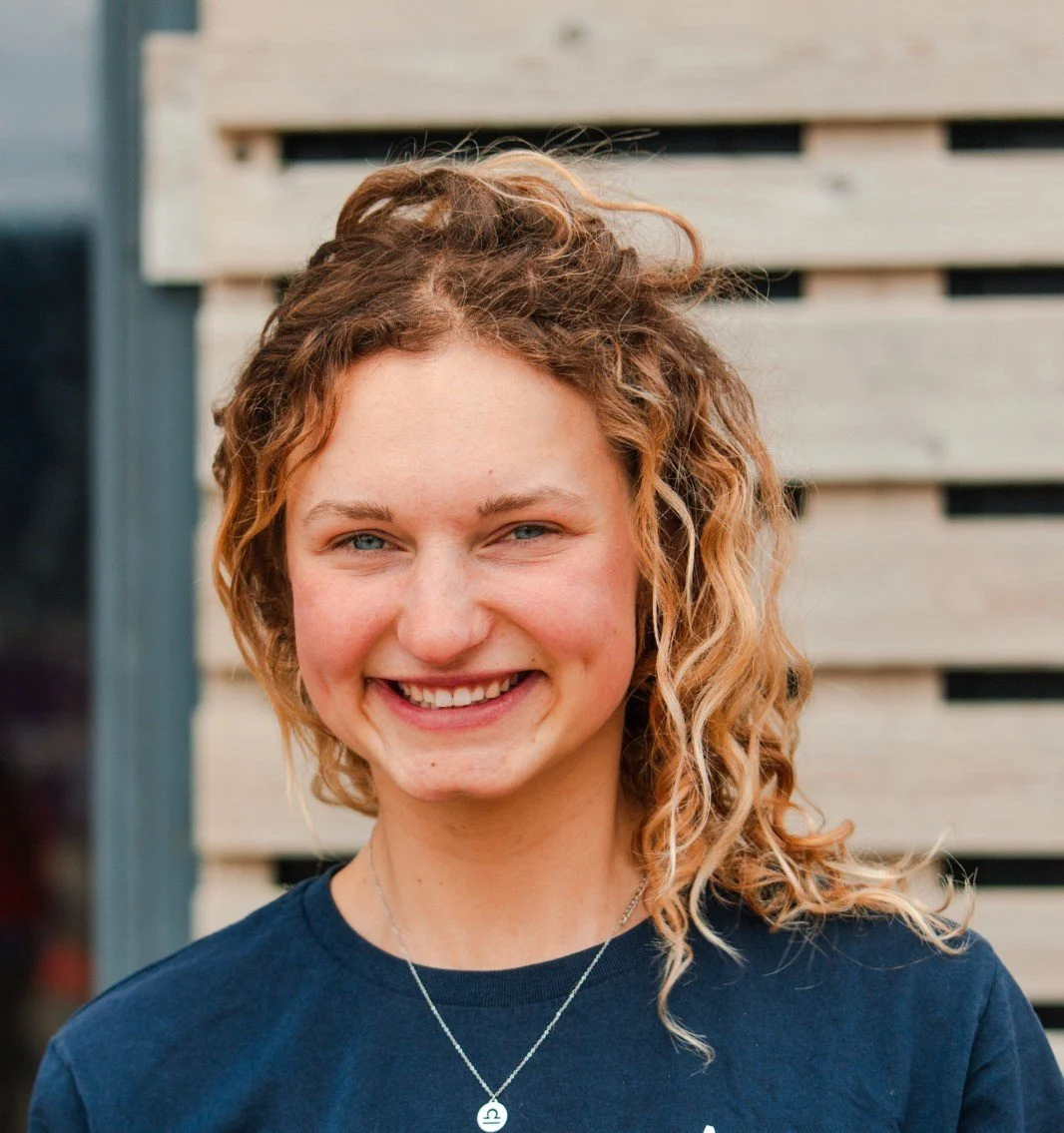
Marloes Helder
Phenotyping with large language modelsMarloes derives accurate phenotypes from large-scale datasets using large language models and genetic analyses. She has automated the identification of keratinocyte cancers from pathology reports, and is now applying language models to medical records to predict additional health outcomes — validating those predictions with genetic methods. She also works on distinguishing in-situ from invasive melanoma using genome-wide association studies and polygenic risk scores.
Interested in collaborating, partnering or studying with us?
Whether you are a clinician, a researcher, a prospective PhD candidate or an industry partner, we would love to hear from you.
Get in touch